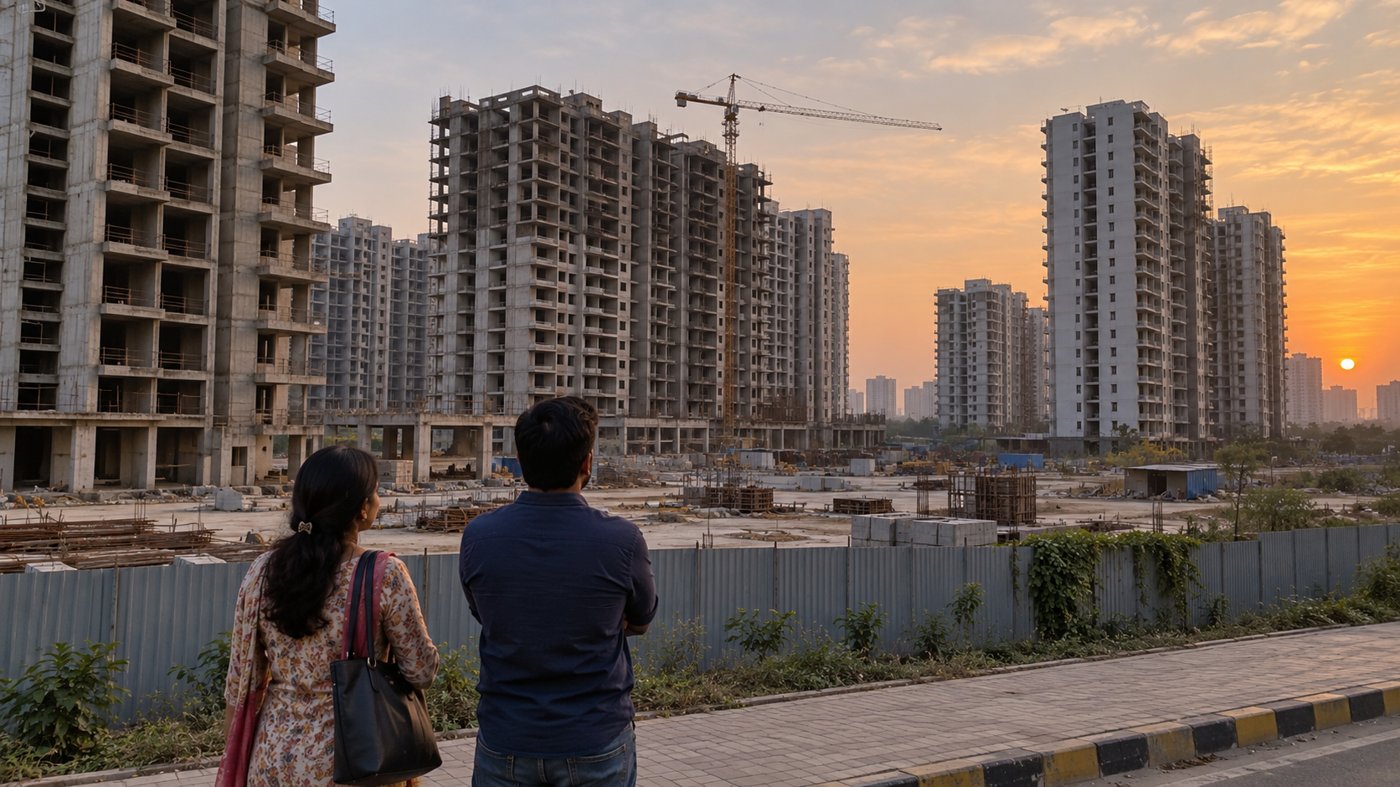
The Uttar Pradesh Cabinet has approved implementation of the Model Building Regulations, 2026 for areas governed by industrial development authorities, according to a state-government statement reported by The Indian Express on 10 October.
The decision was taken at a Cabinet meeting chaired by Chief Minister Yogi Adityanath on Friday, 9 October 2026. The meeting approved 39 proposals across development, industrial investment, agriculture, employment, technology and public welfare. The event date is therefore separate from the article’s publication date.
The regulations are intended to simplify the approval of building maps and plots within the relevant industrial-authority jurisdictions. The government said the framework would support better use of developable land and encourage investment in manufacturing, tourism, information technology and IT-enabled services, logistics, healthcare, education and real estate.
What the Cabinet has approved
The Cabinet approval moves the Model Building Regulations from proposal and review into an implementation decision. Invest UP, the state’s official investment-promotion agency, had reported on 28 July 2026 that the Industrial Development Minister was reviewing the proposed regulations.
That earlier official reference helps establish that the framework went through a policy-development stage before the October Cabinet decision. BrickBharat did not retrieve a final gazette notification or full operative text for the approved 2026 regulations during preparation. Detailed provisions, commencement language and transition rules should therefore be checked when the final government document becomes publicly available.
The phrase “simplified approval” also needs care. Cabinet approval of a common framework does not mean every pending map or plot application has been approved. Individual proposals may still need to comply with land use, access, fire, environment, height, safety, infrastructure and authority-specific requirements.
Which property markets could be affected
Uttar Pradesh has multiple industrial development authorities with significant land and property activity, including Noida, Greater Noida, the Yamuna Expressway area and the Uttar Pradesh State Industrial Development Authority network. However, the retrieved Cabinet report does not provide a complete authority-by-authority commencement schedule.
The rules are relevant to more than factory buildings. Industrial-authority areas can contain logistics facilities, information-technology campuses, offices, supporting commercial premises and other approved uses. A more consistent framework could reduce differences in interpretation between jurisdictions, but the practical benefit will depend on each authority’s systems and implementation.
Invest UP’s official material from January 2026 describes broader state reforms involving digital land-use processes, third-party participation in building and fire inspections, and online issuance of occupancy and completion certificates. Those earlier reforms provide policy context; they are not proof that every feature forms part of the newly approved Model Building Regulations 2026.
What developers and landowners should verify
Developers should wait for the operative regulation and implementation circulars before redesigning a project or assuming a change in floor-area ratio, height, setbacks, ground coverage or permissible use. The current Cabinet report does not supply those property-level specifications.
For a pending application, useful questions include whether the authority will apply the new rules to submissions already filed, whether revised drawings are required, which fees remain payable and whether earlier approvals or no-objection certificates continue to be valid.
Landowners should also distinguish plot approval from building-plan approval. A plotted layout, subdivision, land-use permission and approval for a proposed structure can involve different documents. The new framework may streamline parts of the process without merging every legal and technical requirement.
What buyers and investors should understand
For property buyers, the policy announcement is not a substitute for checking a specific project’s approvals. A developer’s statement that regulations have been eased does not establish that its map has been sanctioned or that construction can legally begin.
Commercial-property investors can monitor whether the final rules shorten approval periods and make industrial and logistics projects easier to execute. Evidence would include published service timelines, online workflows, approval data and completed applications—not only the policy objective.
The Cabinet decision could improve regulatory predictability if the same standards are applied consistently. It does not guarantee a rise in land prices, faster construction or higher rental returns. Those outcomes also depend on infrastructure, demand, finance, execution and the permitted use of the individual site.
The next documents to watch
The most important follow-up material will be the final notified regulations, their effective date, the authorities covered, transition provisions for pending cases and operational instructions for online or offline applications.
Until those documents are available, the verified development is that the Uttar Pradesh Cabinet approved the Model Building Regulations 2026 for implementation in industrial development authority areas. Claims about exact building entitlements or automatic approvals would go beyond the information presently confirmed.
Sources and verification
- The Indian Express — UP eases building-map and plot approvals in industrial development authority areas, published 10 October 2026 at 9:26 AM IST; reports on the 9 October Cabinet meeting and state-government statement.
- Invest UP — Industrial Development Minister reviews proposed Model Building Regulations 2026, official Government of Uttar Pradesh page dated 28 July 2026; used to establish the earlier policy-review stage.
- Invest UP — Deregulation 2.0 press release, dated 16 January 2026; background on the state’s building, land and approval reforms, not confirmation of the final October text.